1
Carl · Shopper
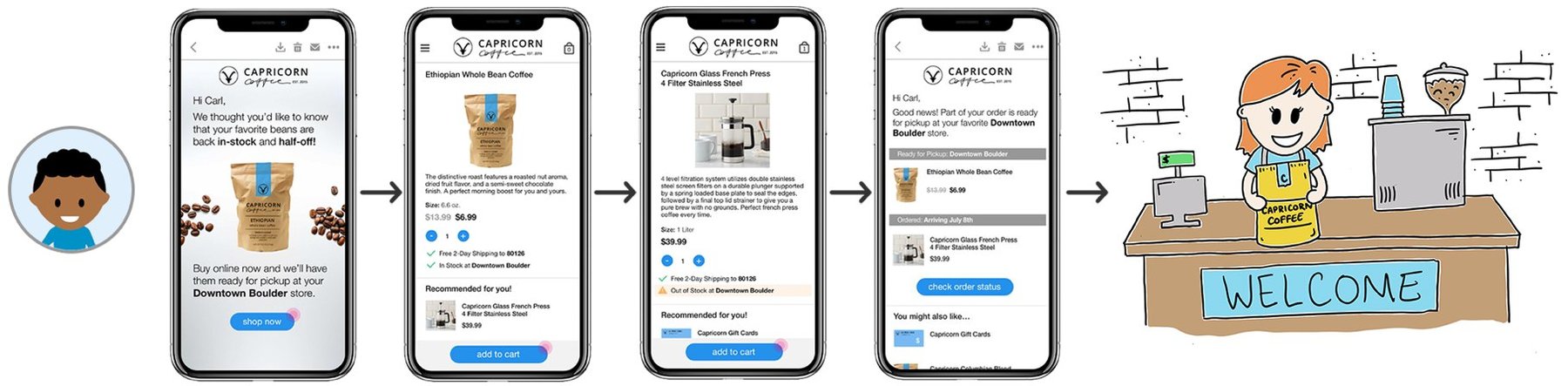
Carl places an online order
Carl buys coffee beans for in-store pickup and a French press that ships, since it's out of stock at his store. One order, two fulfillment methods.
Case Study · Product Vision
Creating a product vision to drive strategic conversations and build organizational alignment.
The Challenge
Order Management had launched, but without native inventory it was a hard sell. Customers had to keep using third-party inventory tools, which felt clunky and spread the full picture across multiple places.
Shopping habits changed fast as the pandemic hit, and pickup and delivery expectations changed with them.
There was no shared picture of the product beyond the MVP, or a clear story for prospective customers.
Stakeholders needed to see what the full platform could do for the product's future.
The Goal
Guide the future product, drive strategy, inspire the team and align the organization.
Even though it was a future vision, it had to stay grounded in what could actually be built on the platform with current technology and resources.
The Vision
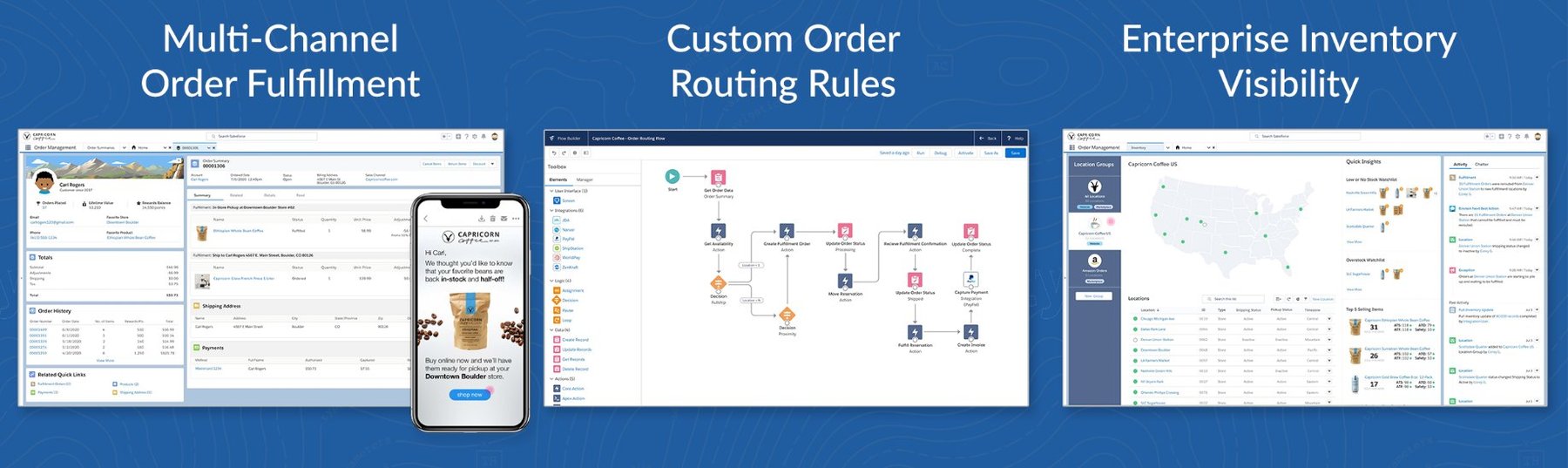
Adding inventory visibility and custom order routing would expand Order Management into Distributed Order Management (DOM): giving merchants options for how shoppers receive orders, and flexibility in how they fulfill them.
Show location-level inventory in the storefront, and mix pickup, ship-to-home and ship-from-store in one order.
Build routing rules with clicks or code, with seamless MuleSoft integration.
One hub for inventory across channels, with insights by location and location group.
Process
Personas
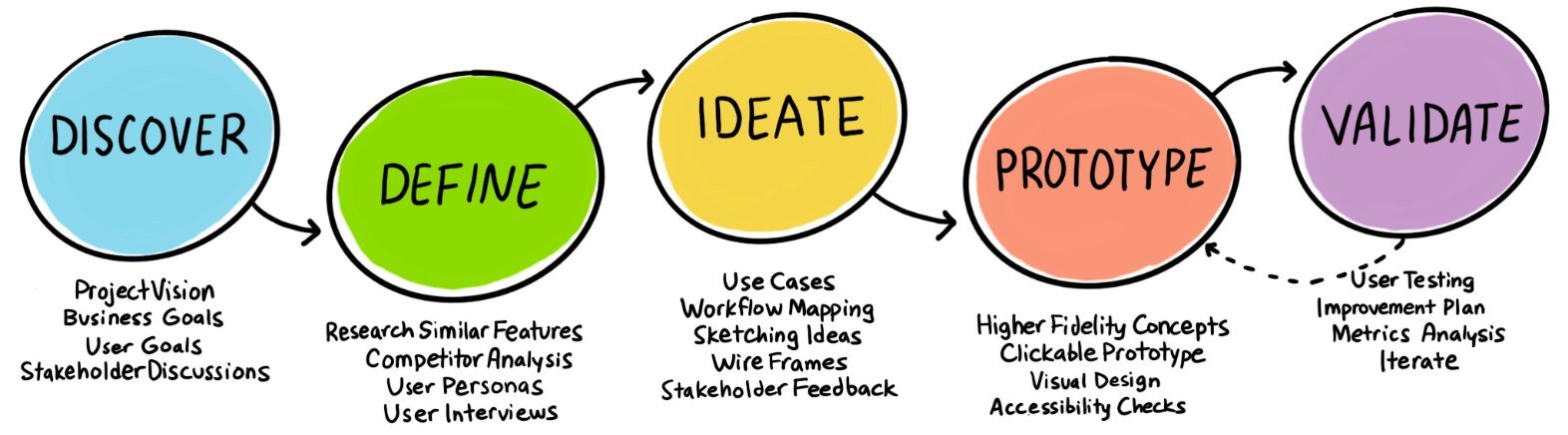
The story needed three personas whose journeys intersect, plus a brand to tie them together.
Ideation
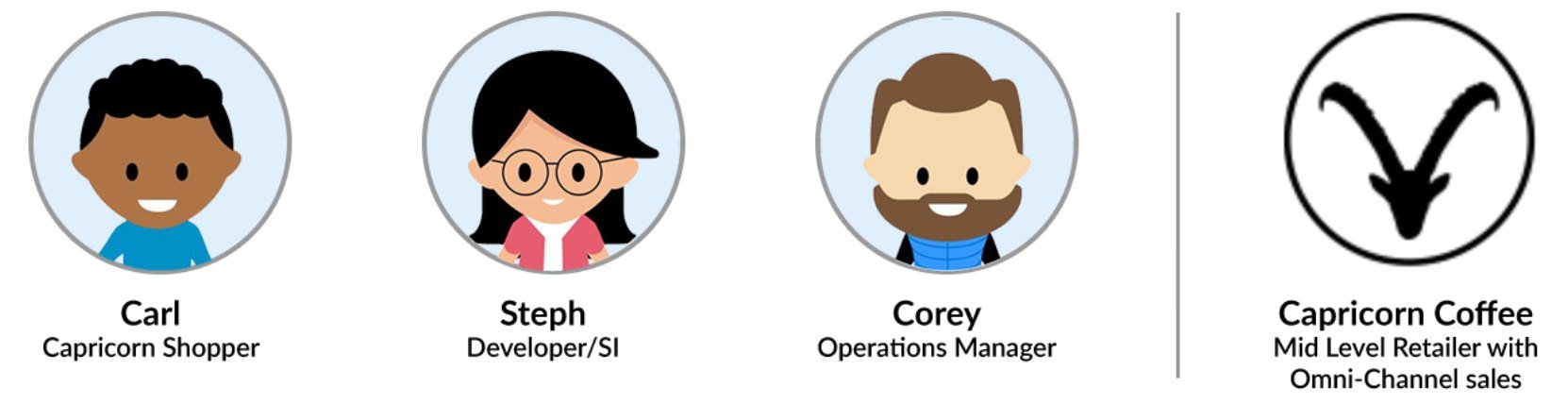
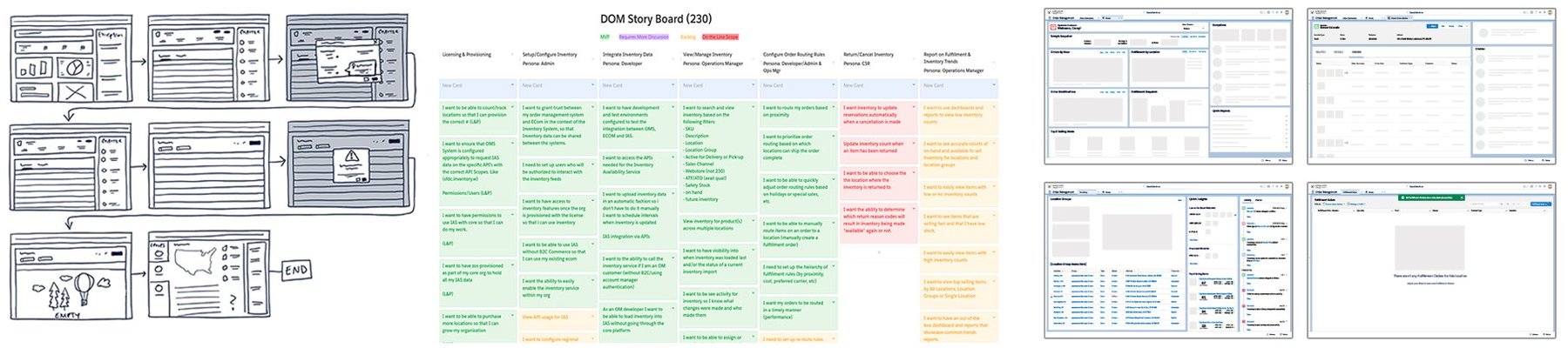
We mapped how each persona's journey hands off to the next, then worked through sketches, affinity mapping and wireframes. Bi-weekly design reviews let us get stakeholder feedback early and iterate without costly rework.

The Solution
We told the vision as one connected story. Parts 2 and 3 happen before Carl's order, but playing them as flashbacks made the story land better with the audience.
Carl buys coffee beans for in-store pickup and a French press that ships, since it's out of stock at his store. One order, two fulfillment methods.
Steph finds the APIs and docs she needs, then works with Corey to define requirements and connect Capricorn's existing inventory systems.

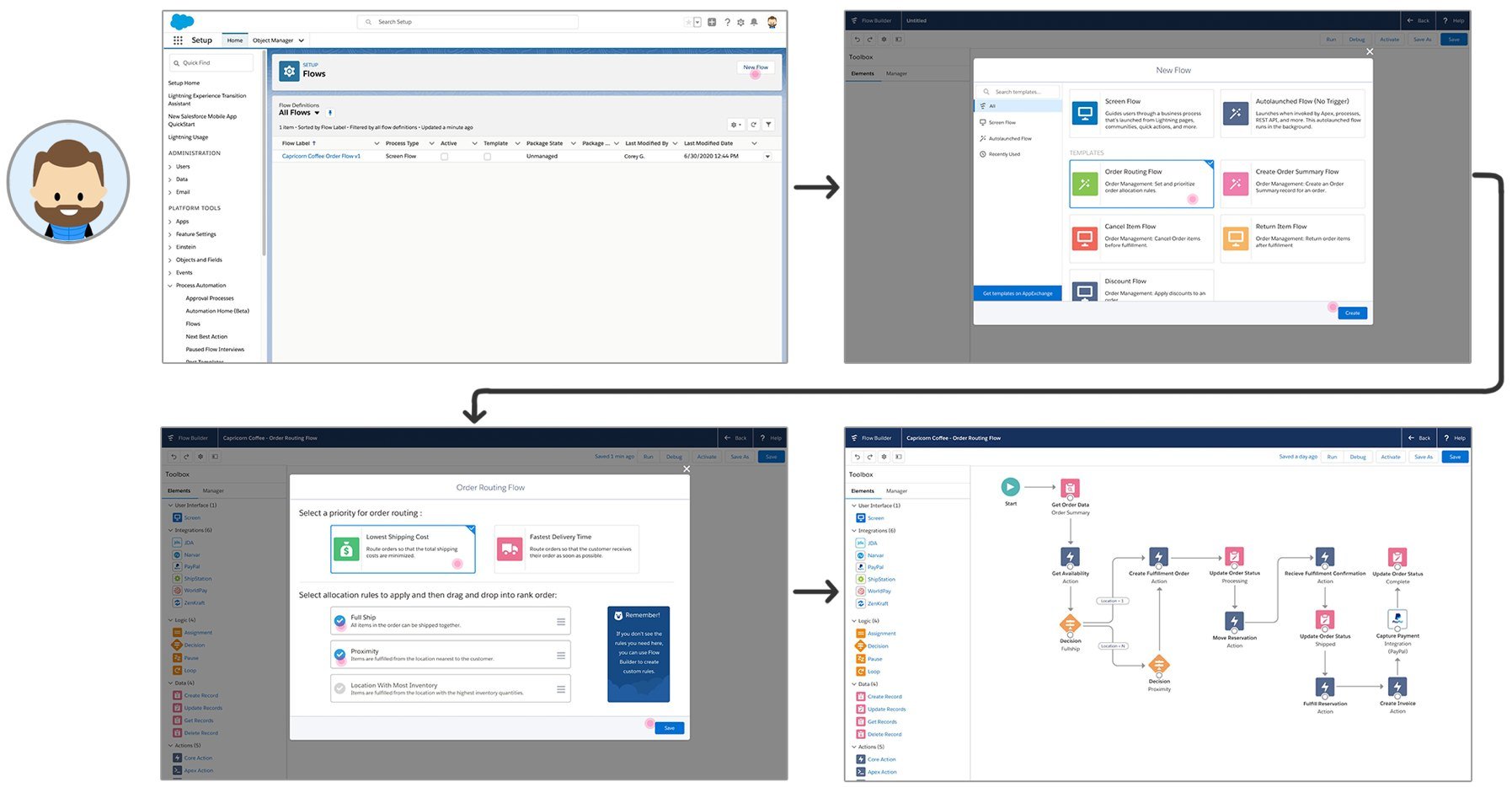
Using the visual flow builder, Corey sets up routing that favors lowest shipping cost over fastest delivery, in line with Capricorn's strategy.
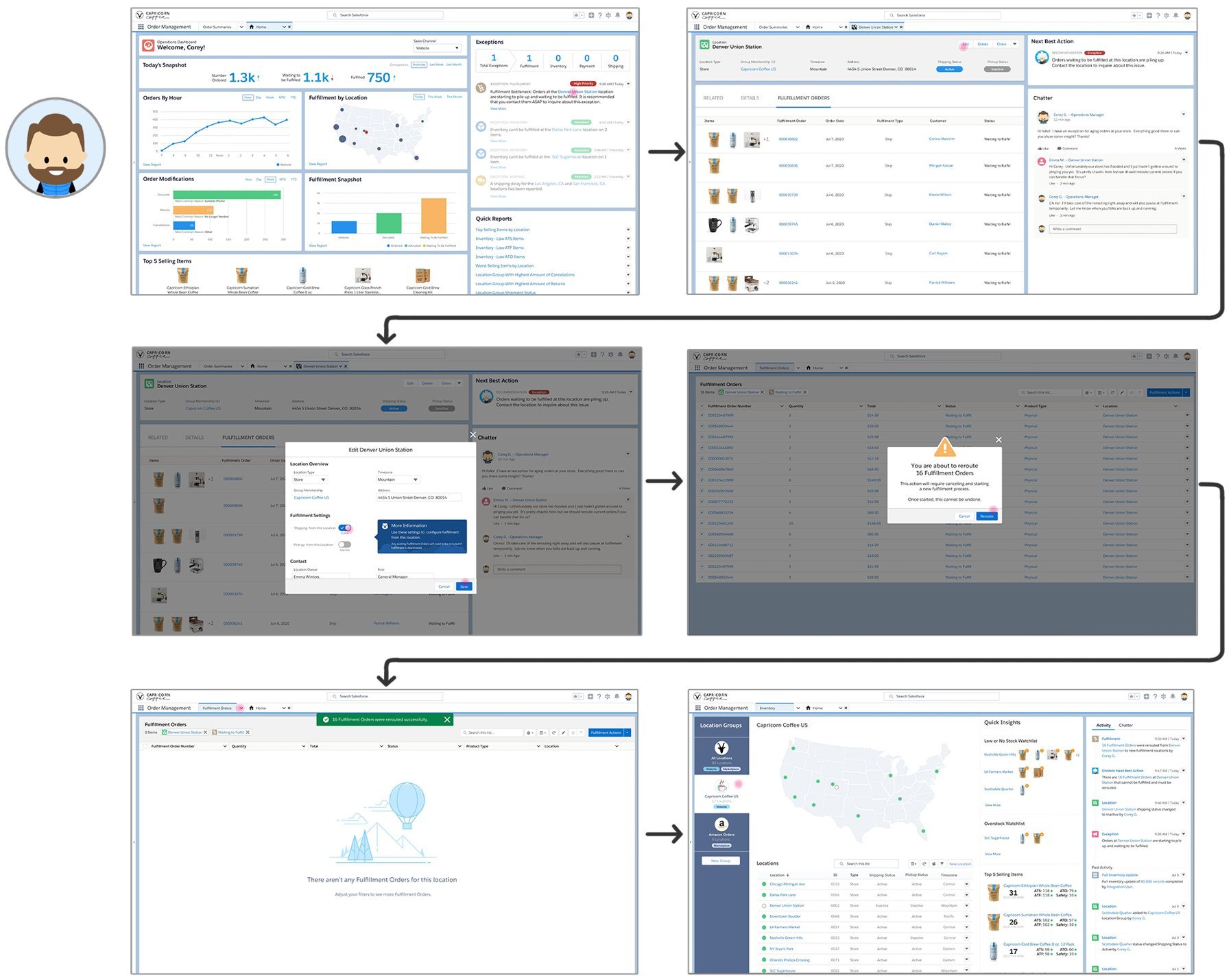
An exception shows orders backing up at the Boulder store, which flooded overnight. Corey turns the location off, and his routing flows send its orders to the next best location.
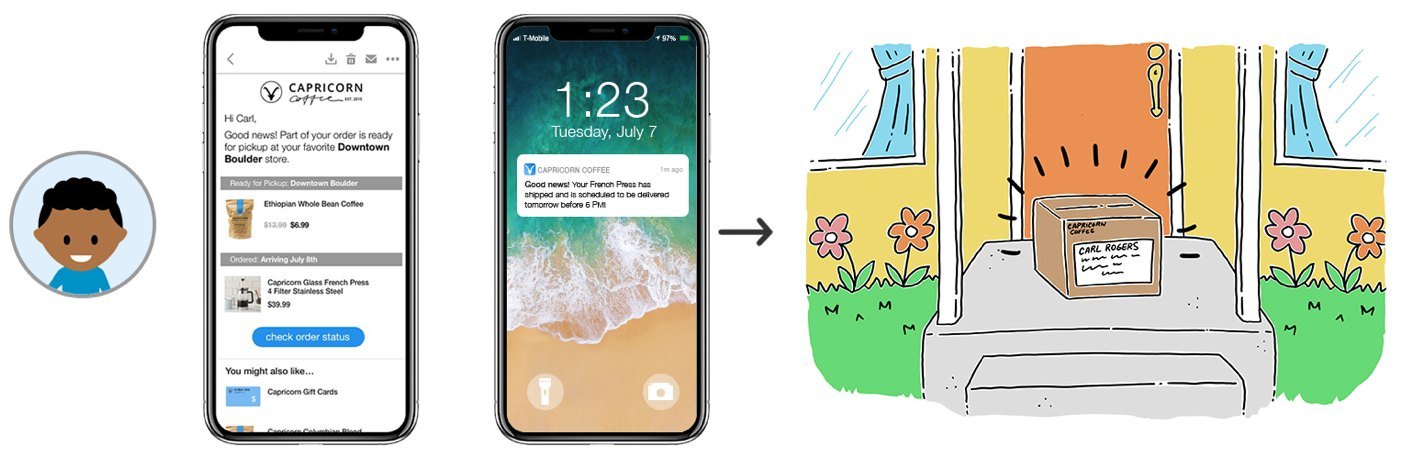
Carl's French press arrives on time. He never knew anything went wrong. His only problem now is figuring out how to use it.
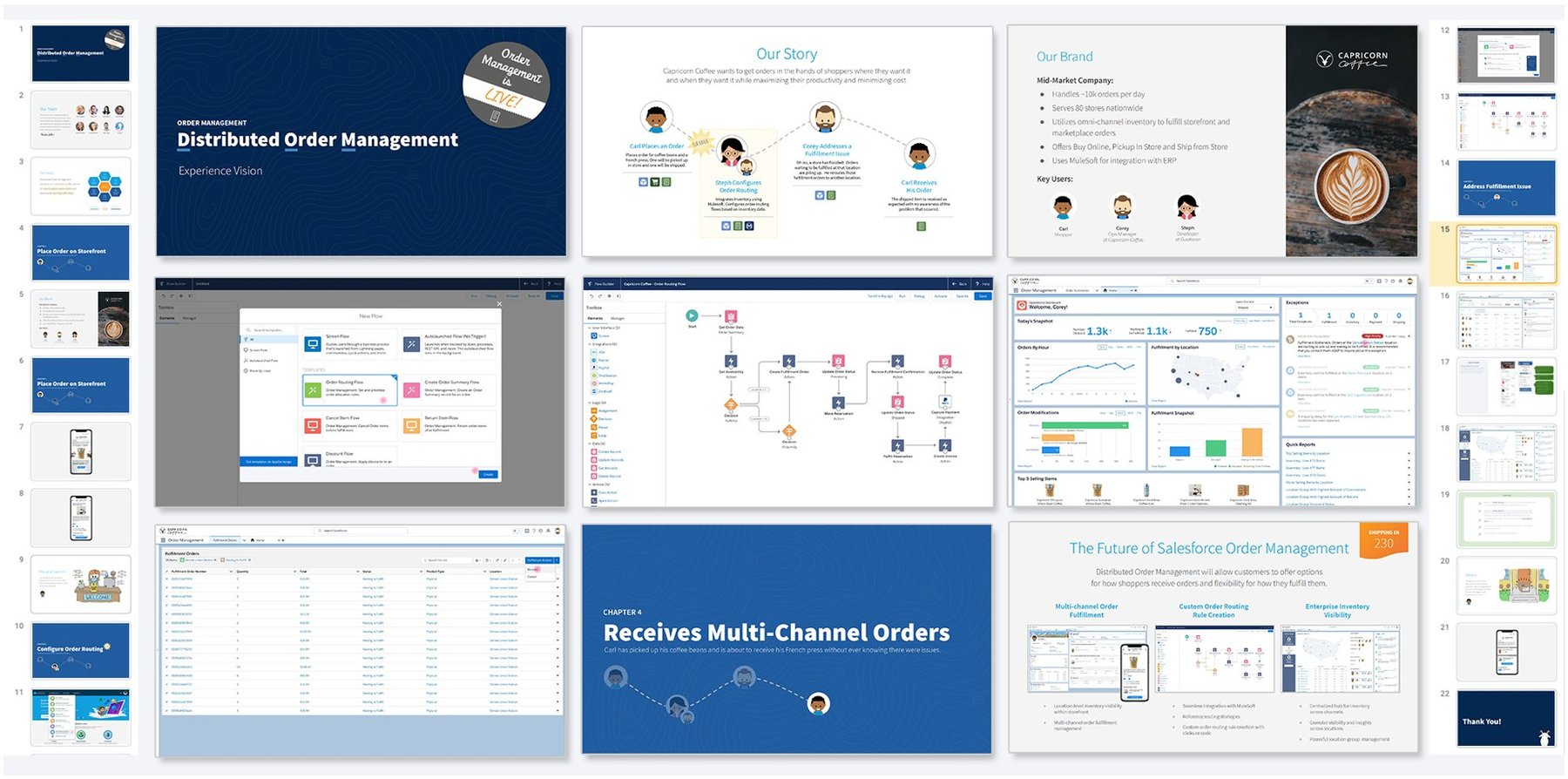
The Presentation
With the story, personas and screens in place, we built a presentation and demo deck. The team took turns presenting each part, and the response was overwhelmingly positive. Our Product GM even did a little "flashback" dance.
Outcomes
A reference for scoping, planning and budgeting three quarterly releases.
Helped prioritization with partner product teams the vision depended on.
The demos and deck were reused in customer-facing marketing.
With stakeholders on board, the next step was breaking the story into chunks of work we could ship over the next several releases.
Questions about this project, or just want to compare notes? Reach out.